
Luno IPTV vs Cable TV
An honest side-by-side look at IPTV and cable TV. Real numbers, real trade-offs, and a clear verdict for US households.
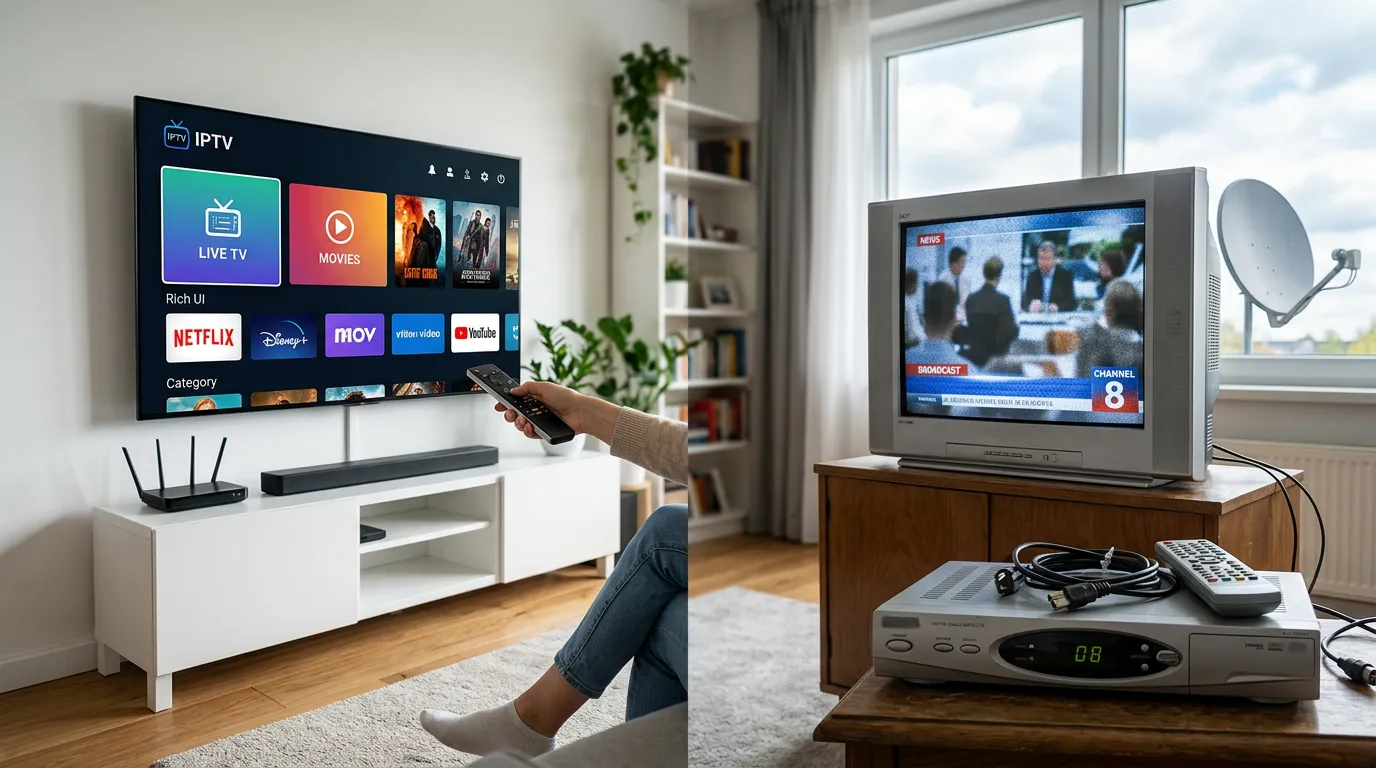
| Feature | Luno IPTV | Cable TV (Xfinity/Spectrum/Cox) |
|---|---|---|
| Monthly Price | $15/mo (1 connection) | $89.99 to $149.99/mo |
| Annual Cost | $180/yr | $1,080 to $1,799/yr |
| Live Channels | 26,000+ | 150 to 300 |
| 4K Content | Included at no extra cost | Extra $10-20/mo add-on |
| VOD Library | 152,000+ titles | Limited on-demand, mostly rentals |
| Contract Required | No contract, cancel anytime | 12 to 24-month minimum |
| Equipment Fee | Use your own device | $10-15/mo cable box rental |
| Installation Fee | Self-install, 5 minutes | $99-149 tech visit fee |
| Free Trial | 24 hours free, no card needed | None |
| Sports Coverage | NFL, NBA, MLB, NHL, UFC, Premier League | Basic sports, regional RSNs |
| International Channels | 80++ countries | Spanish add-on only |
| Customer Support | 24/7 WhatsApp + live chat | Phone hold times, tech visits |
The Verdict
For any household with reliable 25+ Mbps internet, Luno IPTV is the clear financial winner. At $15/month vs $100 to $150/month for cable, the savings exceed $1,000 per year. You get more channels (26,000+ vs 150-300), more on-demand content (152,000+ titles), and 4K sports included. Cable's only real edge is independence from internet reliability. If your broadband is stable, cord-cutting with Luno IPTV is straightforward math.
IPTV vs Cable - Common Questions
Yes, significantly. Cable TV costs $90 to $150 per month from Xfinity, Spectrum, or Cox before equipment fees and taxes. Luno IPTV starts at $15/month with no contract, no equipment rental, and no installation fee. The annual savings range from $900 to $1,500 for most households.
No. You'll actually gain channels. Cable's top packages top out at 200 to 300 channels. Luno IPTV carries 26,000+ channels including all major US networks, regional sports, international content, and premium movie channels. Most cable channels you watch regularly are included.
Yes. ABC, CBS, NBC, Fox, and PBS local affiliates are included for all major US markets. You get your local news, NFL games, and major network events without an antenna or cable subscription.
No contract at all. You can cancel anytime without an early termination fee. Cable providers like Xfinity and Spectrum require 12 to 24-month contracts with fees of $50 to $200 if you leave early.
The Price Difference Is Massive
The average US household pays $127.43 per month for cable TV according to consumer data from 2024. Xfinity's most popular package runs $99.99 before equipment fees ($10-15/mo for a cable box) and taxes. Spectrum and Cox run similarly. Over 12 months, most cable subscribers spend $1,200 to $1,800 a year on TV service. Luno IPTV costs $15/month. That's a difference of over $1,000 a year for many households. And cable locks you into a 12 or 24-month contract. Luno IPTV has no contract at all.
Annual Cost Breakdown: Cable vs Luno IPTV
| Cost Item | Luno IPTV | Cable TV (Xfinity mid-tier) |
|---|---|---|
| Base monthly fee | $15.00/mo | $99.99/mo |
| Equipment/cable box | $0 | $12.50/mo |
| 4K sports add-on | $0 | $15.00/mo |
| Installation | $0 | $129 one-time |
| Annual total | $180/yr | $1,530/yr+ |
| 2-year total | $360 | $3,189+ |
What Luno IPTV Has That Cable Doesn't
- 26,000+ channels vs cable's 150-300 channels
- 152,000+ movies and series on demand vs cable's limited on-demand rental library
- 4K Ultra HD included at no extra charge
- No contract and no early termination fee
- 80++ countries' channels vs cable's English-only packages
- 24 hours free trial with no credit card required
- Works on any device you already own, not a rented cable box
- International sports: Premier League, Champions League, Copa America included
Where Cable Still Has an Edge
Honest answer: cable is more reliable when your internet goes down. If your broadband dies, IPTV dies with it. Cable TV runs on its own infrastructure. For most households with reliable broadband this isn't an issue, but it's worth knowing. Cable also has a slight edge on absolute channel count for purely local broadcast quality in rural areas with poor internet. If you're in an area with less than 25 Mbps broadband, cable might still be the better call for now.